
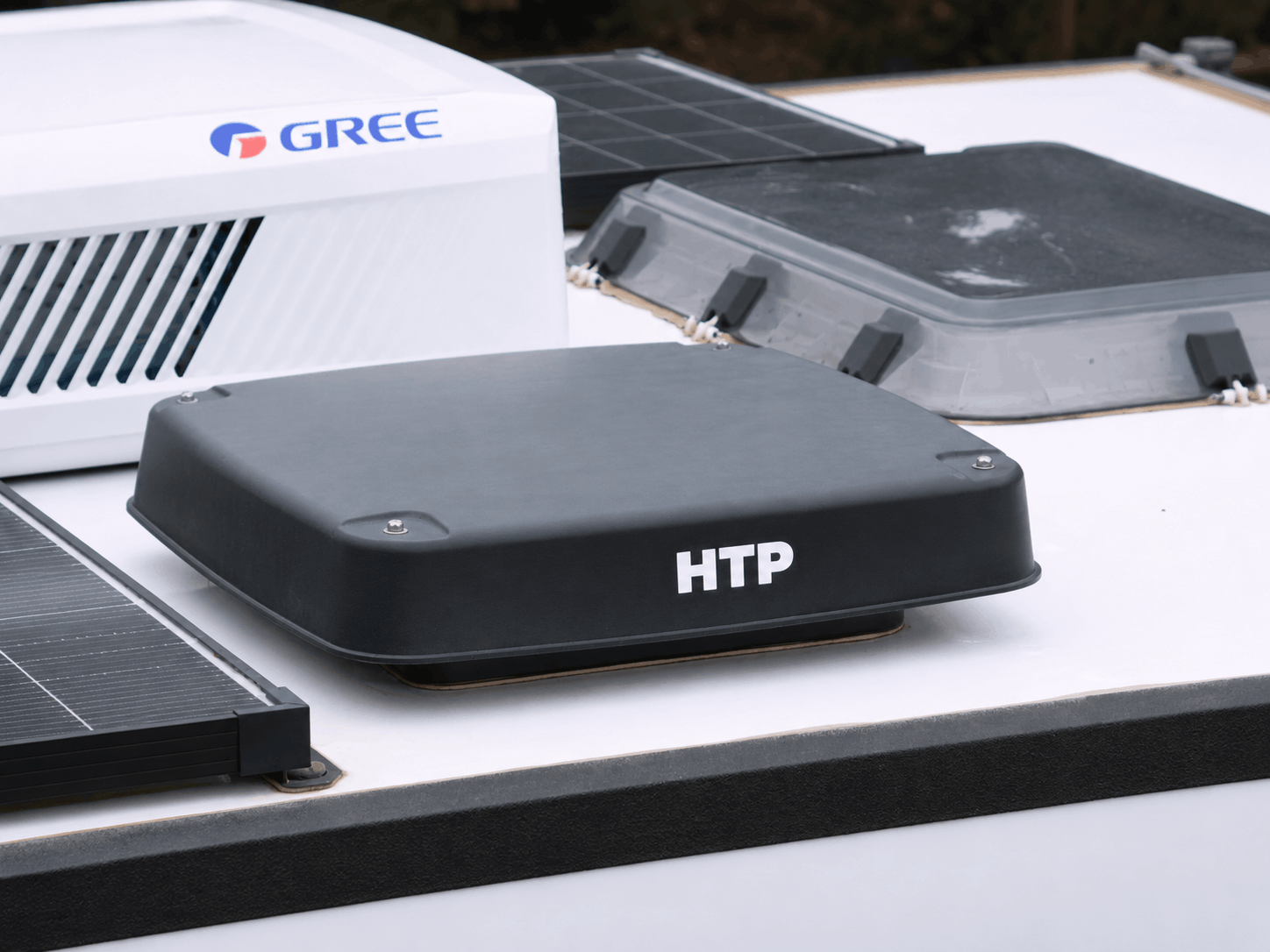
You can check the door seals, shut every hatch and wipe the van down before leaving. Then, after a few hours on an unsealed road, you open the door and find a fine layer of dust across the bench, inside the cupboards and around the bedding.
The frustrating part is that there may not be one obvious hole to fix. A moving caravan creates changing air pressure around its body, and dusty outside air can be drawn through vents, seals and small gaps that are difficult to see.
A caravan dust reduction system tackles the problem differently. It draws filtered air into the van and helps maintain positive internal pressure while you drive. This encourages air to move out through small gaps rather than allowing dust-laden air to be pulled in.
This guide explains how the system works, where caravan dust commonly enters, what positive pressure can and cannot do, and how to choose between the HTP CPU, ST12 and HP12 systems.
Contents
What is a caravan dust reduction system?
A caravan dust reduction system is a roof-mounted 12V unit that draws outside air through a filter and distributes it inside the caravan. The incoming filtered airflow helps create slightly higher air pressure inside the van than outside it.
That pressure difference matters because air naturally moves from an area of higher pressure to an area of lower pressure. Instead of dusty air being drawn inward through small gaps, the system encourages cleaner internal air to move outward.
- A roof cover receives outside air while travelling.
- A filter captures airborne dust before it enters the van.
- A 12V fan moves the filtered air into the cabin.
- An internal diffuser spreads airflow through the caravan.
- Positive pressure helps minimise dust ingress through small gaps.
How does positive pressure reduce caravan dust?
The easiest way to understand positive pressure is to think about which direction the air is trying to travel.
Without a pressure system, low-pressure areas can form around the caravan as it moves. Air may then be drawn inside through door seals, plumbing penetrations, vents and other small openings. If the outside air contains fine road dust, that dust travels with it.
A dust reduction system continuously introduces filtered air into the cabin. When enough filtered air enters, the pressure inside becomes slightly higher than the pressure outside. The airflow through many small gaps is then encouraged to move outward rather than inward.
1. Outside air enters
The roof-mounted cover receives outside air while the caravan is moving through dusty conditions.
2. Dust is filtered
The system passes the incoming air through a paper or washable aluminium filter before it reaches the cabin.
3. Filtered air is distributed
The fan pushes filtered air into the caravan and the internal diffuser helps spread it more evenly.
4. Air pressure changes
The added airflow helps discourage unfiltered dusty air from being drawn inward through small gaps.
The important distinction: the system does not block every grain of dust. It changes the pressure and airflow inside the van so dust has fewer opportunities to be drawn in.
Where does dust enter a caravan?
Dust does not always enter through one large, visible opening. Fine particles can find their way through several areas at once, especially when seals are worn or penetrations have not been properly closed.
Doors and storage hatches
Compressed, damaged or poorly aligned seals can leave small pathways around doors and external storage compartments.
Fixed appliance vents
Some appliances require permanent ventilation. These openings can be exposed to turbulent, dust-heavy air while travelling.
Floor and wall penetrations
Plumbing pipes, electrical cables and gas lines may pass through openings that require careful sealing around their edges.
Wheel arches and body joins
Road dust is concentrated underneath the van, making wheel arches, floor joins and lower body penetrations important areas to inspect.
This is why a pressure system works best as part of a complete dust reduction approach. It can help manage airflow, but damaged seals and obvious gaps should still be repaired.
Will a dust reduction system make a caravan dust-proof?
No. A caravan dust reduction system is designed to minimise dust ingress, not make a caravan completely dust-proof.
Its effectiveness depends on the condition of the caravan, the amount of fixed ventilation, the size and airflow of the system, filter condition, installation quality and the road conditions being travelled.
A correctly selected and maintained system can make a substantial difference. However, promising a totally dust-free interior would ignore the reality that caravans still contain doors, vents, joins and service penetrations.
A better goal is controlled airflow. Reduce the amount of unfiltered air being drawn into the van, filter the air deliberately introduced through the roof and repair avoidable gaps elsewhere.
How do you choose the right caravan dust reduction system?
The biggest system is not automatically the right system. You need enough airflow to support positive pressure without adding unnecessary current draw, size or cost.
Caravan length is a useful starting point, but it should not be the only consideration. A longer van usually contains more internal air volume and more potential leakage points, while a heavily vented layout may require more airflow than a tightly sealed van of a similar size.
| What to check | Why it matters | What to look for |
|---|---|---|
| Caravan length | Larger vans generally contain more air volume and may have more potential entry points. | Use the recommended van-size ranges as a practical starting point. |
| Fixed ventilation | Permanent vents allow air to escape and can affect how easily positive pressure is maintained. | Consider the number and size of appliance and safety vents. |
| Electrical capacity | Higher-airflow systems draw more current and require suitable wiring and protection. | Confirm current draw, cable size and installation requirements. |
| Roof space | The external cover, cut-out and internal diffuser all need adequate clearance. | Measure available roof area and check for solar panels, air conditioners and roof framing. |
| Touring conditions | Regular travel on heavily corrugated or dusty roads may justify greater airflow and reusable filtration. | Match the system to how often and where the caravan is used. |
The HTP caravan dust reduction system range
The HTP range provides three airflow levels for different caravan sizes and touring requirements. Each system is Australian-made, operates from 12V power and is designed to create positive cabin pressure while travelling.

HTP CPU
The original CPU is the compact option in the range. Its 12V 80W fan delivers up to 696 CFM, while a high-efficiency paper filter captures fine airborne dust before the air enters the van.

HTP ST12
The ST12 increases airflow to 847 CFM and uses a washable aluminium filter. It suits owners who need more pressure support than the original CPU without moving to the highest-current model.
HTP HP12
The HP12 is designed for larger vans and higher-demand applications. Its high-performance 12V 144W fan delivers up to 1250 CFM through a washable aluminium filter.
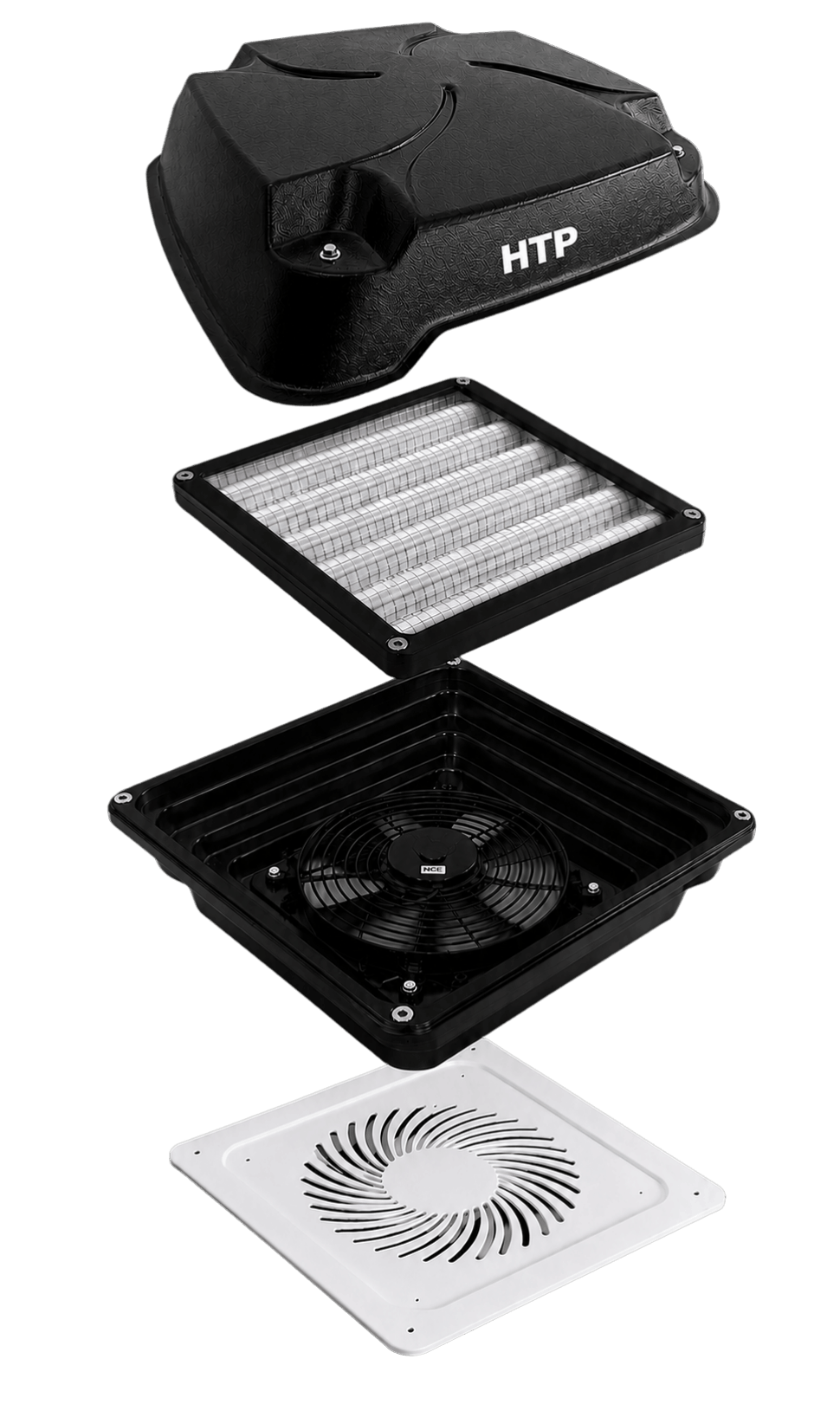
The ST12 and HP12 combine an external roof cover, washable aluminium filter, 12V fan assembly and internal diffuser.
CPU vs ST12 vs HP12 comparison
| System | Suggested van size | Airflow | Filter | Current draw | Best suited to |
|---|---|---|---|---|---|
| HTP CPU | 16–20ft | Up to 696 CFM | High-efficiency paper filter | Check product installation requirements | Smaller vans, lighter weight and a compact starting point. |
| HTP ST12 | 20–24ft | Up to 847 CFM | Washable aluminium filter | 9A | Medium and larger vans needing a balance of airflow and efficiency. |
| HTP HP12 | 24ft+ | Up to 1250 CFM | Washable aluminium filter | 22A | Large caravans and higher-demand off-road touring. |
The suggested caravan sizes provide a practical guide rather than a guarantee. Vans with substantial fixed ventilation, ageing seals or unusual layouts may need individual assessment before a system is selected.
What should be checked before installation?
A dust reduction system needs more than an empty patch of roof. The location affects airflow inside the cabin, access to wiring and the ability to seal the roof opening correctly.
Roof cut-out
The CPU, ST12 and HP12 are listed with a 315 × 315mm roof cut-out. Confirm the opening against the current installation instructions before cutting.
Roof thickness
The ST12 and HP12 suit roof thicknesses of 40–50mm. A spacer may be required where the roof construction falls outside the standard fitment range.
Electrical supply
The installer must provide appropriately sized cable, circuit protection and switching for the model’s current draw.
Internal airflow
The diffuser should be positioned where incoming filtered air can spread through the main cabin rather than being trapped inside a small compartment.
Installation should follow the supplied instructions and any applicable electrical, gas, structural and caravan safety requirements. Roof framing, existing equipment and service penetrations should be checked before work begins.
How often should the filter be cleaned or replaced?
There is no single interval that suits every trip. A filter used on occasional sealed-road travel will load far more slowly than one used across hundreds of kilometres of dry, powdery tracks.
The best routine is to inspect the filter before a dusty trip, during extended off-road travel and again after returning. Reduced airflow, visible dust loading or a filter that cannot be cleaned effectively are signs that attention is needed.
CPU paper filter
Inspect the paper filter regularly and replace it when it is heavily loaded, damaged or restricting airflow.
ST12 and HP12 aluminium filter
Remove and clean the washable filter according to the supplied care instructions, then allow it to dry fully before refitting.
A clean filter matters for two reasons. It improves the quality of the incoming air and helps the fan maintain the airflow needed to support positive pressure.
How can you improve dust reduction throughout the van?
The best results come from combining filtered positive pressure with basic sealing and maintenance. Think of the pressure system as the active part of the solution, while the rest of the caravan still needs to be kept in good condition.
Before the next dusty trip
- Inspect door, hatch and storage-compartment seals for damage or compression.
- Check plumbing, electrical and gas penetrations for visible gaps.
- Inspect wheel arches, floor joins and lower body areas.
- Clean or replace the dust reduction system filter.
- Confirm the fan runs correctly before leaving sealed roads.
- Keep required safety and appliance ventilation open and compliant.
- Use suitable external dust deflectors where compatible and appropriate.
- Recheck seals and mounting points after rough-road travel.
Do not permanently block vents that are required for gas appliances, refrigeration or occupant safety. Dust reduction work should never compromise mandatory ventilation.
Caravan dust reduction system FAQs
Do caravan dust reduction systems work?
Yes. A correctly selected, installed and maintained system can substantially reduce dust ingress by introducing filtered air and helping maintain positive pressure inside the caravan. Results still depend on the van’s seals, fixed ventilation and overall condition.
How does a caravan dust pressure system work?
It draws outside air through a filter and pushes the filtered air into the caravan. The added airflow helps create higher pressure inside the van, encouraging air to move outward through small gaps rather than drawing dusty air inward.
Does a dust reduction system make a caravan dust-proof?
No. It is designed to minimise dust ingress, not guarantee a completely dust-free caravan. Damaged seals, open vents, installation quality and severe road conditions can all affect the result.
Should a caravan dust reduction system run while driving?
Yes. The system is intended to operate while travelling through dusty conditions so it can introduce filtered air and support positive cabin pressure when dust ingress is most likely.
What size dust reduction system do I need?
As a starting guide, the HTP CPU suits approximately 16–20ft vans, the ST12 suits 20–24ft vans and the HP12 suits vans around 24ft and above. Fixed ventilation, sealing and layout should also be considered.
Can a caravan dust reduction system be retrofitted?
Yes, subject to suitable roof space, roof construction, electrical supply and installation clearances. The roof should be assessed before any opening is cut.
Do I still need to seal gaps in the caravan?
Yes. Positive pressure works best when avoidable gaps and damaged seals have been repaired. The system should complement good sealing rather than replace it.
Is a washable filter better than a paper filter?
Each has advantages. The CPU paper filter provides replaceable filtration, while the ST12 and HP12 aluminium filters can be cleaned and reused. The right option depends on the system size and how regularly the van travels in dusty conditions.
How often should the filter be checked?
Check it before dusty travel, during long off-road trips and after returning. Heavy dust, reduced airflow or visible filter loading means it should be cleaned or replaced sooner.
Are caravan dust deflectors still useful?
Yes. A pressure system and external dust deflectors perform different jobs. The pressure system filters incoming roof air, while compatible deflectors can help shield selected external openings and guide airflow around them.