
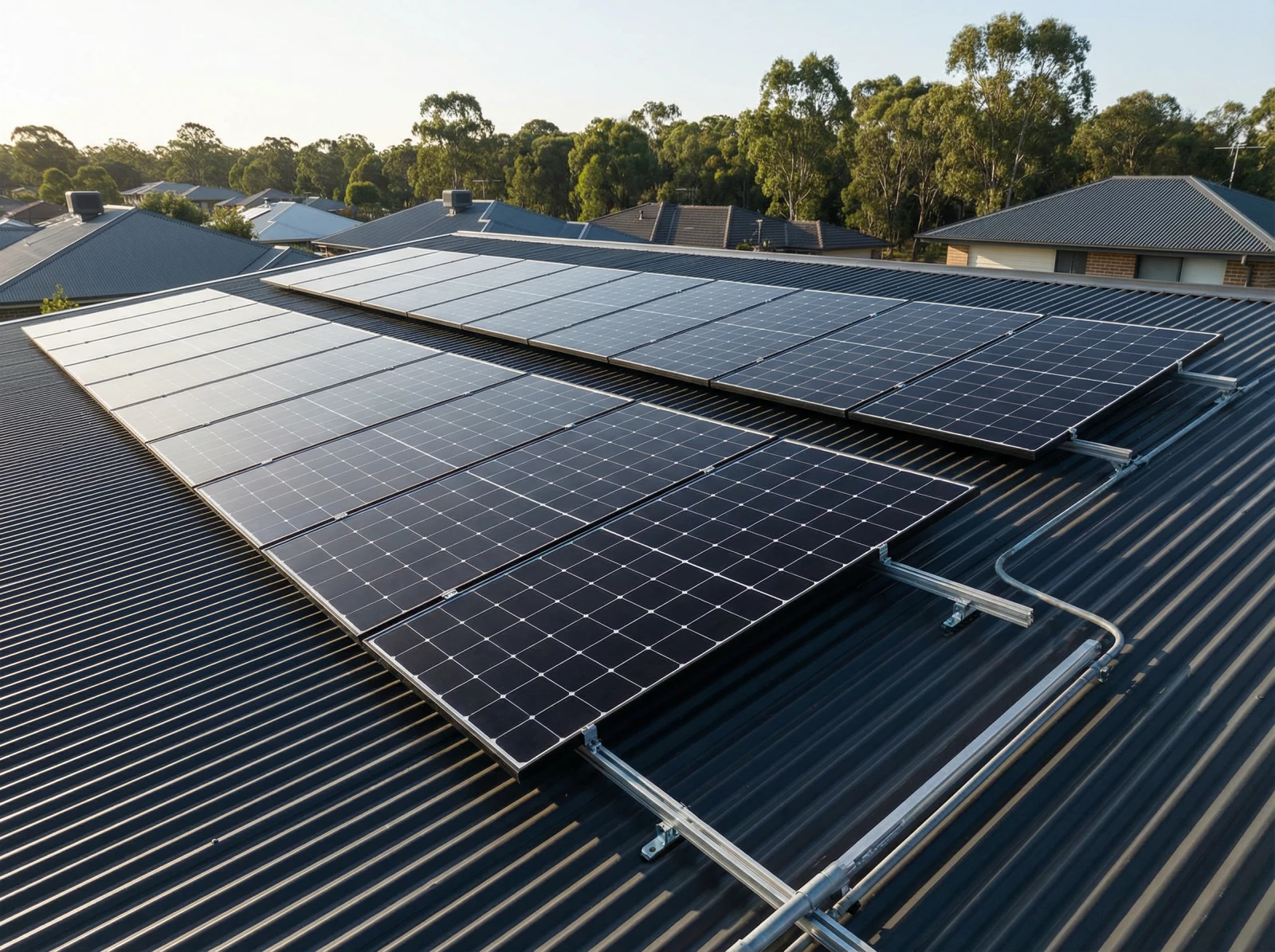
Choosing a solar panel is no longer just about wattage. Modern systems are increasingly compared on efficiency, long-term output retention, temperature performance and how effectively they use limited roof space. The SunPower Maxeon 3 395W is designed around those priorities.
While many standard 395W panels target affordability, the Maxeon 3 platform is engineered as a premium high-efficiency solution for residential rooftops, commercial buildings and larger grid-connected systems where long-term energy performance matters.
This guide explains how the Maxeon 3 395W differs from conventional solar panels, what the technical specifications actually mean in real-world use, and where this style of panel makes the most sense.
View SunPower Maxeon 3 395WContents
Key specifications at a glance
Performance output
395W nominal power output with 22.3% module efficiency, designed to maximise energy production from limited roof space.
Temperature behaviour
A low temperature coefficient of -0.27% per°C helps maintain stronger performance during hotter Australian conditions.
Structural durability
Rated for 2400Pa wind loading, 5400Pa snow loading and tested for 25mm hail impact resistance.
System compatibility
Suitable for residential rooftops, commercial solar systems, grid-connected installations and larger energy projects.
Understanding the Maxeon platform
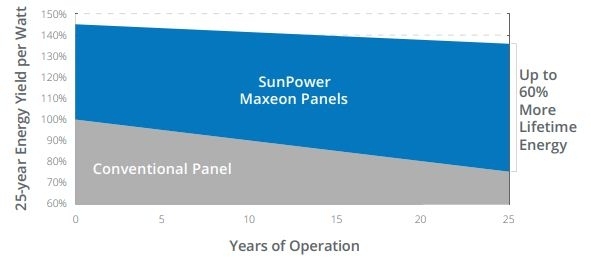
One of the main differences between the Maxeon 3 and conventional solar panels is the underlying cell architecture. Many standard panels use front-contact busbars across the face of the cell, while Maxeon cells use a rear-contact design with a copper-backed foundation.
This construction is designed to reduce electrical resistance while improving long-term structural stability. In practical terms, it helps minimise fatigue from thermal cycling, vibration and long-term environmental exposure.
The panel also uses a 104-cell design rather than some of the more common configurations seen across standard residential modules. This influences voltage behaviour, string design and inverter pairing considerations during installation planning.
Why efficiency matters beyond wattage
Two panels can both be rated at 395W while behaving very differently in real-world conditions. Efficiency becomes especially important where roof space is limited or where maximising annual output is a priority.
With a module efficiency rating of 22.3%, the Maxeon 3 395W sits above many standard 395W modules that commonly operate closer to 18% to 20%.
Higher efficiency means more usable power generation from the same installation area, which can become valuable on residential rooftops, commercial sites and architecturally constrained projects.
Temperature performance in Australian conditions
Solar panels naturally lose output as cell temperatures rise. The temperature coefficient determines how aggressively performance drops during hotter conditions.
The Maxeon 3 uses a temperature coefficient of -0.27% per°C, which compares favourably against many conventional panels that commonly sit around -0.34% to -0.40%.
In Australian summer conditions, rooftop temperatures can climb significantly above standard testing conditions. Lower temperature loss can help improve overall daily energy harvest during peak heat periods.
Mechanical durability and long-term reliability
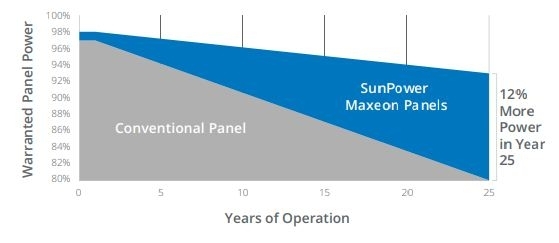
Solar panels spend decades exposed to weather, thermal expansion, vibration and environmental stress. Mechanical durability becomes increasingly important over the lifespan of the system.
The Maxeon 3 395W is rated for 2400Pa front and rear wind loading, 5400Pa snow loading and hail impact resistance tested at 25mm hail travelling at 23m/s.
These ratings support its suitability for residential installations, commercial rooftops and larger-scale ground-mounted solar applications.
Electrical design explained
Solar panel wattage is only one part of system design. Voltage characteristics and current ratings play a major role in inverter compatibility and array layout planning.
| Specification | Value | Why it matters |
|---|---|---|
| Vmpp | 65.4V | Used for inverter sizing and string voltage calculations. |
| Voc | 75.6V | Important for ensuring systems remain within inverter voltage limits. |
| Isc | 6.57A | Relevant for cable sizing, protection and system safety calculations. |
| Maximum system voltage | 1000V | Defines compatible array and inverter configurations. |
| Series fuse rating | 20A | Used during protection and electrical design planning. |
Electrical system design should always be completed by qualified solar installers or accredited system designers.
Commercial solar applications
High-efficiency panels are commonly considered for commercial solar installations where available roof area is limited and energy demand is high.
Commercial solar systems often focus heavily on energy yield per square metre, long-term output consistency and operational reliability over decades of service.
Panels such as the Maxeon 3 are typically evaluated where businesses want to maximise system output without significantly increasing installation footprint.
Maxeon 3 vs standard 395W solar panels
| Feature | Maxeon 3 395W | Typical 395W panel |
|---|---|---|
| Efficiency | 22.3% | Often 18% to 20% |
| Temperature coefficient | -0.27% per°C | Typically -0.34% to -0.40% |
| Cell architecture | Rear-contact Maxeon cells | Conventional front-contact designs |
| Performance focus | Premium efficiency and long-term output | Standard residential applications |
| Best suited to | Premium residential and commercial installs | General solar applications |
Buying checklist
- Compare efficiency alongside wattage output.
- Consider available roof space before selecting panel quantity.
- Review temperature performance for Australian climates.
- Confirm inverter compatibility before installation.
- Consider long-term durability and environmental exposure.
- Review commercial vs residential system requirements.
- Use accredited installers for final system design and compliance.
FAQs
Why are premium solar panels more expensive?
Premium solar panels are often designed around higher efficiency, improved temperature performance and more advanced cell construction. They may deliver stronger long-term output and better use of limited roof space.
Do higher efficiency solar panels make a difference?
Higher efficiency panels can generate more power from the same installation area, which becomes important when roof space is limited or energy demand is higher.
What is a good temperature coefficient for solar panels?
Lower negative values generally indicate better heat performance. A panel with a lower temperature coefficient retains more output during hotter operating conditions.
Are high efficiency solar panels better for commercial buildings?
High efficiency panels are commonly selected for commercial buildings where maximising output per square metre is important.