
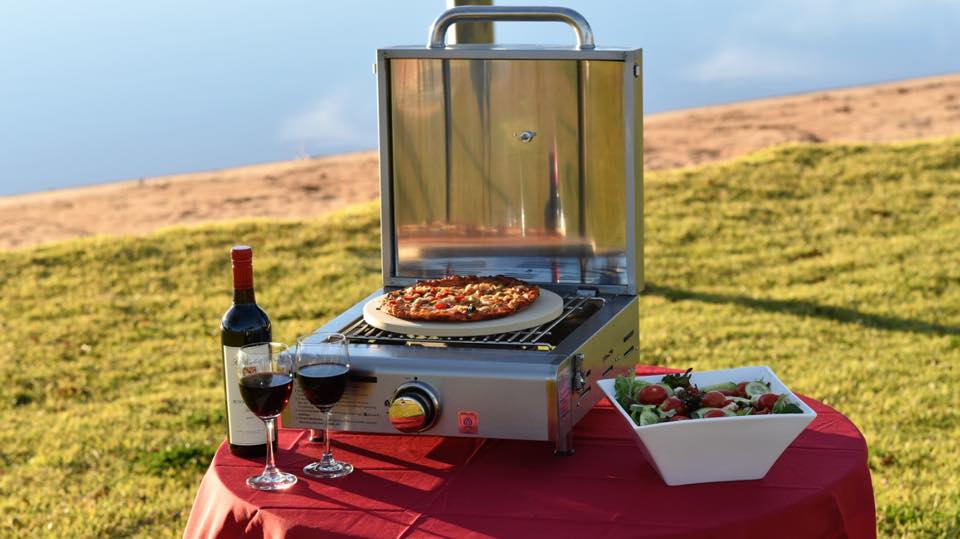
A portable BBQ is one of the easiest ways to make caravan cooking more practical. It keeps heat, smoke, and food smells outside the van, while giving you a flexible way to cook breakfast, lunch, or dinner wherever you pull up.
For many travellers, outdoor cooking becomes part of the trip. A compact BBQ gives you a proper cooking surface without relying only on the kitchen inside the caravan. It also makes short stops easier, especially when you want to cook quickly without unpacking half the van.
This guide explains what to look for in a caravan BBQ, the different fuel options, why portable gas BBQs suit most travellers, and how to use and store your BBQ safely while touring.
Contents
Why portable BBQs suit caravan travel
A portable BBQ gives you a more flexible cooking setup without taking over the caravan kitchen. It lets you cook outside in the open air, keep the van cooler in warm weather, and avoid lingering food smells inside the living space.
It also suits the way most people actually travel. Some days call for a quick bacon and egg breakfast before driving. Other days are better suited to a slower dinner outside the van. A compact BBQ gives you both options without needing a large fixed outdoor kitchen.
- Keeps cooking heat outside the caravan
- Reduces grease, smoke, and food smells inside the van
- Makes quick roadside meals easier
- Works well for caravan parks, free camping, and beach trips
- Stores neatly in tunnel boots, rear compartments, or ute trays
Choosing the right portable BBQ for your setup
The best portable BBQ for caravanning is not always the biggest or most powerful one. It needs to be easy to lift, simple to clean, stable to cook on, and compact enough to store without becoming a hassle every time you pack down.
Think about how often you cook outside, how many people you usually feed, and where the BBQ will be stored while travelling. A couple doing short trips may only need a compact hotplate BBQ, while a family travelling for longer periods may prefer a larger cooking surface and a lid for more flexible meal options.
Portable Gas BBQ
Portable gas BBQs are the most practical option for most caravanners. They heat quickly, are easy to control, and use LPG bottles that are commonly available throughout Australia.
Flatplate BBQ
Flatplate BBQs are ideal for everyday travel meals. They work well for bacon, eggs, seafood, burgers, vegetables, and general campsite cooking.
BBQ With Lid
A lid gives you more cooking flexibility. It helps with roasting, more even heat control, and improved cooking performance in windy or cooler conditions.
Electric BBQ
Electric BBQs can suit powered caravan parks, but they are usually less practical off-grid unless your battery and inverter setup can handle the load.
For most caravan travellers, a compact gas BBQ with a lid offers the best balance of portability, cooking control, storage size, and ease of use.
What to look for in a caravan BBQ
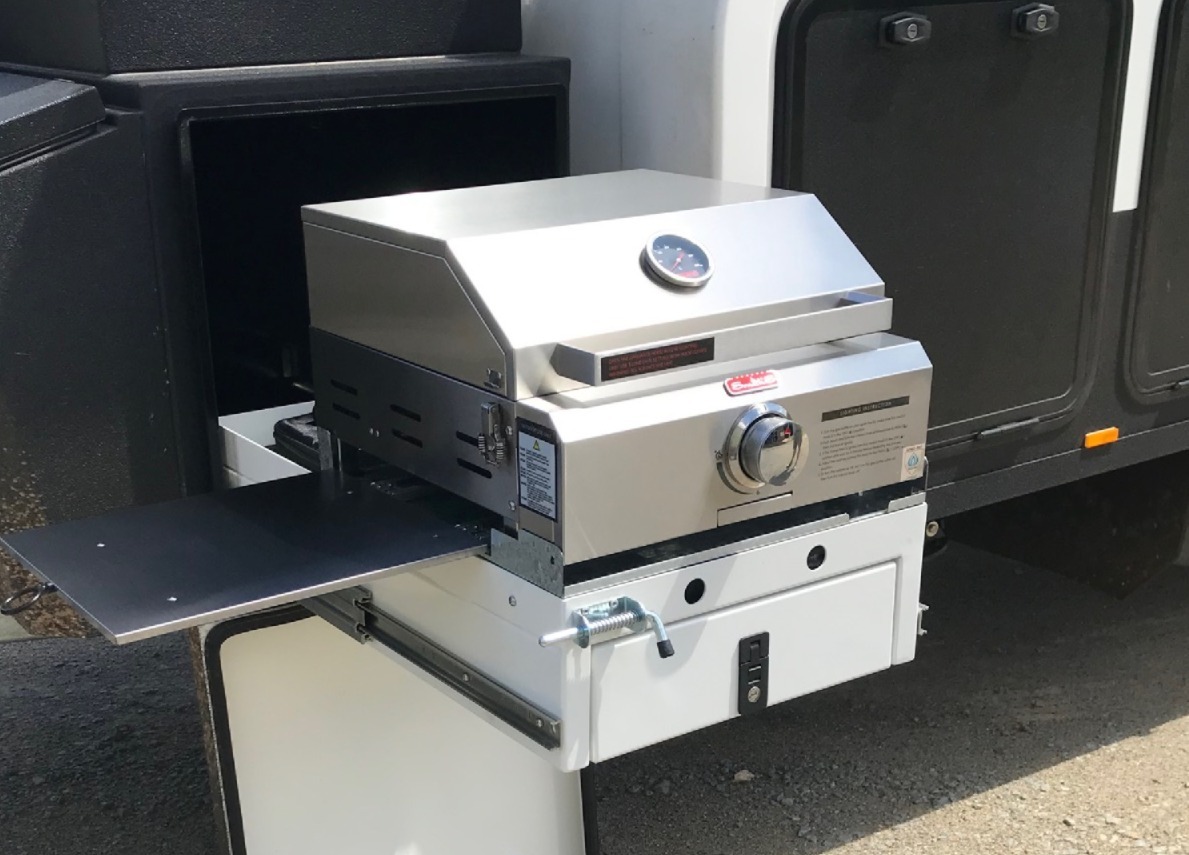
Storage size should be one of the first things you check. A BBQ might look compact in a showroom, but it still needs to fit your tunnel boot, front storage box, rear compartment, or vehicle setup. Measure the available space before choosing a model.
Weight also matters. If the BBQ is too heavy or awkward to lift, it becomes frustrating to use regularly. Look for strong carry handles, folding legs, a secure lid, and a design that can be moved comfortably by one person if needed.
Cooking Surface
A wider hotplate is better for families or longer stays, while smaller cooking surfaces are easier to store and suit couples or solo travellers.
Easy Cleaning
Removable drip trays, smooth plates, and simple access to cooking surfaces make cleanup much easier after meals.
Stable Base
Stable feet and strong legs are important when cooking on gravel, grass, sand, or uneven campsite surfaces.
Travel Durability
Stainless steel or quality coated finishes generally handle heat cycles, moisture, vibration, and coastal conditions better over time.
Portable BBQ fuel comparison
Fuel type has a big impact on how practical the BBQ is while travelling. Gas is usually the easiest option for caravan use, while charcoal and electric models suit more specific situations.
| Fuel Type | Advantages | Things To Consider | Best For |
|---|---|---|---|
| Portable Gas BBQ | Fast heat-up, simple control, easy bottle swaps, low cleanup | Requires safe LPG storage and regular hose checks | Most caravan travellers and touring setups |
| Charcoal BBQ | Traditional flavour and slower cooking style | More cleanup, ash disposal, and fire restriction limits | Relaxed camping trips where fire rules allow |
| Electric BBQ | Simple to use at powered sites with minimal fuel storage | Not ideal off-grid without strong battery and inverter capacity | Caravan parks and powered holiday sites |
| Multi-Fuel BBQ | Flexible cooking options across different fuel types | Can be heavier, bulkier, and more complicated than needed | Travellers who want maximum cooking flexibility |
Gas setup and storage basics
Most portable caravan BBQs connect to LPG bottles using a regulator and hose. Some caravans also include an external bayonet fitting, often near the tunnel boot or outdoor cooking area, which can make setup faster and cleaner.
Before buying, check the BBQ connection type, regulator requirements, and hose length. If you are connecting to a caravan bayonet fitting, make sure the BBQ and connection setup are compatible.
Check Hoses
Inspect hoses for cracking, stiffness, or visible wear. Replace damaged hoses before use.
Test For Leaks
Apply soapy water to connection points after setup. Bubbles can indicate a leak that needs fixing before cooking.
Store Bottles Upright
Gas bottles should be stored upright, valve closed, and properly secured so they cannot move during travel.
Allow Clearance
Keep the BBQ clear of caravan walls, awnings, annex material, dry grass, and other heat-sensitive surfaces.
Safe use and maintenance
Always use a portable BBQ outdoors in a clear, ventilated area. Avoid cooking inside the caravan, inside an annex, or too close to canvas walls and awnings. A stable surface and good airflow make cooking safer and more comfortable.
After cooking, let the BBQ cool before packing it away. Scrape the plate, empty the drip tray, and wipe down greasy areas to reduce smells and avoid mess inside your storage compartment.
Keep a compact fire blanket nearby when cooking outside. It is a simple safety item that is worth carrying in any caravan cooking setup.
Buying checklist
- Check the BBQ fits your tunnel boot, hatch, tray, or storage compartment
- Choose a weight that is easy to lift and move around camp
- Look for a cooking surface that suits your usual number of travellers
- Consider a lid if you want roasting, baking, or better heat control
- Choose easy-clean plates and a removable drip tray
- Confirm gas fitting, regulator, and hose compatibility before purchase
- Look for stable feet or legs for uneven campsite surfaces
- Use a carry bag or storage cover to protect other gear
FAQs
What type of BBQ is best for caravanning?
A portable gas BBQ is usually the best option for caravanning because it heats quickly, is easy to control, and uses LPG bottles that are widely available across Australia.
Is a small BBQ enough for family meals?
Yes, a small BBQ can work for family meals, especially if it has a wide hotplate or lid. Larger families may prefer a bigger cooking surface to reduce cooking in batches.
Can I use a portable BBQ at caravan parks?
Most caravan parks allow portable BBQs in outdoor areas, but rules can vary. Always check park guidelines, especially during high fire danger periods.
Is gas or charcoal better for caravan travel?
Gas is generally better for caravan travel because it is faster, cleaner, and easier to manage. Charcoal can offer great flavour, but it takes longer and may be restricted during fire bans.
Do I need special fittings to connect a BBQ to my caravan?
Some caravans have bayonet gas fittings for outdoor cooking, while others use a standard LPG bottle and regulator. Always check compatibility before connecting any BBQ.
How should I store a portable BBQ in a caravan?
Let the BBQ cool completely, clean the plate, empty the drip tray, and store it in a carry bag or protected compartment to reduce grease, odours, and mess.