
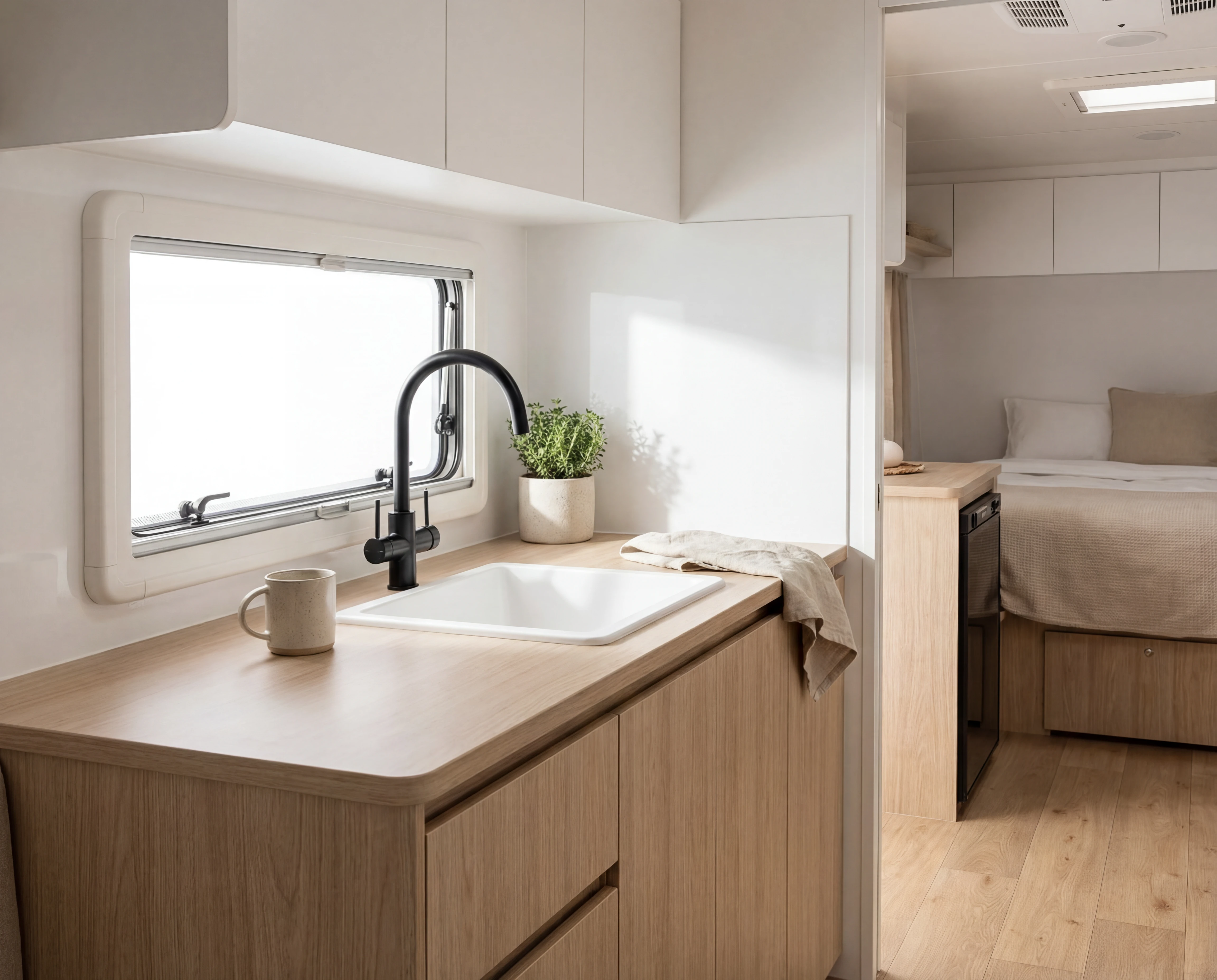
Water is one of the first things you notice when a caravan plumbing setup is not right. Low flow at the sink, plastic-tasting drinking water, blocked aerators, leaking fittings, or filters that are hard to access can all turn simple daily jobs into a frustration.
A good caravan plumbing setup is not just about having a tap that looks right. It needs to work with lower pressure from 12V pumps, compact sinks, limited tank capacity, mixed water sources, and the movement that comes with towing. The right combination of caravan taps, water filters, hoses, fittings, and pressure control helps make the system easier to use and easier to maintain.
This guide covers caravan tap types, water quality on the road, filter options, tap and filter combinations, installation points, common mistakes, and real-world setup examples for different travel styles.
Shop Caravan PlumbingContents
How caravan water systems differ from home plumbing
Caravan plumbing has to do more with less. Instead of stable household mains pressure and fixed cabinetry, a van relies on tanks, 12V pumps, compact fixtures, flexible hose runs, and lighter cabinetry. It also has to handle vibration, changing water pressure, different fill points, and long periods of storage.
That is why caravan taps and filters need to be chosen carefully. A heavy household mixer can look good, but it may not suit lower pressure, thinner benches, or the movement of a touring van. A purpose-built caravan mixer is normally lighter, easier to mount, and better suited to controlled flow from a 12V pump.
- Caravan pumps usually operate at lower pressure than household mains
- Benchtops and cabinetry are often thinner and lighter
- Water may come from parks, towns, bore supplies, rainwater tanks, or remote fill points
- Filters and fittings need to be accessible for maintenance
- Pressure control matters when connecting to caravan park mains water
Caravan tap types and where they work best
Caravan taps need to suit both the sink and the way the van is used. A tap that works well in a full-size home kitchen can be too tall, too heavy, or too awkward in a compact caravan galley. Before choosing one, check spout height, spout reach, handle clearance, mounting hole size, bench thickness, and the space available under the sink.
Flow is another key difference. A 12V pump may deliver around 6–12L/min at modest pressure, so the tap needs to provide a steady stream without wasting tank water. A good caravan mixer should open smoothly, give controlled flow, and make washing up easier without excessive splashing.
Mixer taps
Single-lever mixer taps are common in modern caravans because they provide hot and cold control from one compact fitting. They are practical for kitchens and ensuite areas where space is limited.
High-rise taps
High-rise taps give extra clearance for pots, bottles, and larger cookware. They can be very useful in shallow sinks, but the spout height and reach need to suit the bowl to avoid splashing.
Compact taps
Shorter, compact taps are useful in smaller kitchens, pop-top layouts, tight sink areas, or ensuite vanities where clearance is limited.
Folding taps
Folding taps suit pop-tops and slim galleys with glass lids. The tap can fold down so the lid closes flat, giving more bench space while travelling.
Hand-pump taps
Manual pump taps work without power and use very little water. They suit simple builds, remote setups, or backup use, although they are slower for everyday kitchen use.
Fitment tip
Confirm bench thickness and cut-out size before ordering. Thin benchtops may need a backing plate to reduce flex and help prevent loosening over time.
If you rinse larger cookware, check the spout reach and height carefully. A reach that is too short makes washing awkward, while a reach that is too long can splash against small bowls.
Water quality on the road
Water quality can change quickly when travelling. Tourist parks will usually supply treated mains water, but country towns may have mineral-heavy bore water, and remote stops can involve rainwater tanks or unknown sources. Sediment, chlorine taste, odour, and mineral content are common issues across different fill points.
You do not need to overcomplicate the system, but you do need a plan. The most practical approach is to stop larger sediment before it reaches the tanks, then improve taste and odour at the tap. This helps protect pumps, aerators, hoses, and filter cartridges while making drinking water more pleasant day to day.
Stage one: protect the tank
An inline hose filter can be connected when filling tanks or hooking up at a park. It helps catch sediment before it reaches the caravan plumbing system.
Stage two: improve drinking water
An under-sink filter can polish the water at the tap, helping reduce chlorine taste, odour, and other unwanted qualities depending on the cartridge used.
Caravan water filter types explained
The right filter depends on where you want to treat the water. Some filters are designed to protect the whole system at the fill point, while others are designed to improve drinking water from the kitchen tap.
Inline hose filters
Inline filters connect to the hose when filling tanks or connecting at a park. They are easy to fit, quick to replace, and useful for frequent travel between different water sources.
Under-sink filters
Under-sink filters mount inside cabinetry and supply filtered water at the tap. They keep the bench clear and are a good long-term solution for everyday drinking water.
Carbon block filters
Carbon filtration helps reduce chlorine taste and odours, which is useful when filling from treated mains water in towns and caravan parks.
Sediment pre-filters
A sediment stage is helpful when filling from dusty or mineral-heavy water sources. It can reduce clogging and help finer cartridges last longer.
Tap and filter kits
Matched tap and filter kits combine the mixer, cartridge, and fittings into one cleaner setup. They are useful for refits, renovations, and new caravan builds.
Two-stage tip
Use an inline filter at the hose to reduce sediment before the tank, then use an under-sink carbon filter for better taste at the tap.
Tap and filter options to consider
Puretec CR45 Caravan RV Filter System
The Puretec CR45 Caravan RV Filter System is a practical option for caravan and RV water filtration. It helps improve the quality of water used for drinking and cooking, especially when travelling between mixed water sources.
This type of system is useful for touring because water quality can vary between caravan parks, regional towns, bore supplies, and remote stops. A dedicated filter system helps make daily water use more consistent and easier to manage.
NCE Short Flick Mixer Tap Black 150mm
The NCE Short Flick Mixer Tap Black 150mm is suited to compact caravan kitchens, ensuite vanities, and smaller sink areas where space is limited.
The short flick mixer design gives simple control in a smaller footprint, while the black finish suits modern caravan interiors, black sinks, and darker fixture styling.
Caravan water filter comparison table
Different filters solve different problems. The best setup often combines more than one stage, especially if you travel through a mix of caravan parks, rural towns, and remote areas.
| Filter Type | Primary Role | Advantages | Things To Consider | Best For |
|---|---|---|---|---|
| Inline Hose Filter | Filters water before it enters tanks or plumbing | Easy to fit, protects pumps and tanks, helps reduce sediment | Cartridge performance varies by filter type | Frequent site changes and mixed water sources |
| Under-Sink Filter | Improves drinking water at the tap | Neat install, better taste, convenient daily use | Needs accessible cartridge space inside cabinetry | Everyday drinking and cooking water |
| Sediment Filter | Captures grit, dirt, and particles | Helps reduce clogging and protects finer cartridges | May need more frequent replacement in dusty regions | Bore water, tank fills, and outback touring |
| Carbon Filter | Reduces taste and odour issues | Improves drinking water quality and reduces chlorine taste | Does not replace good tank hygiene or safe water sourcing | Town water, park water, and regular touring |
| Tap and Filter Kit | Combines tap and filtration in one setup | Clean finish, matched components, tidy installation | Still needs correct fitment and cartridge access | New builds, renovations, and kitchen upgrades |
Installation and safety
Good plumbing installation is about more than getting the parts connected. The tap needs to be supported correctly, fittings need to match, filters need space for maintenance, and the system needs protection from pressure spikes when connecting to mains water.
For taps, confirm bench thickness, cut-out size, hose connections, and clearance under the sink. For filters, mount cartridges where they can be reached easily. If a filter housing is too hard to access, cartridge changes are more likely to be skipped.
Use a backing plate where needed
Thin benchtops can flex around the tap base. A backing plate can help support the fitting and reduce loosening over time.
Match fittings properly
Check thread types, hose sizes, washers, and adapters before installation. Carrying spare washers, PTFE tape, olives, and adapters is useful when travelling.
Flush new cartridges
After fitting a new cartridge, flush the system until the water runs clear and the taste settles.
Reduce park mains pressure
A pressure reducer is recommended when connecting to caravan park mains water to protect hoses, tap seals, fittings, and filter housings.
Before working on plumbing near a 12V pump, turn the pump off, open the tap to relieve pressure, and then start disconnecting fittings.
Common mistakes to avoid
Small plumbing mistakes can create ongoing issues in a caravan. The most common problems usually come from using the wrong tap, skipping filtration, restricting flow too much, or making filter cartridges difficult to access.
Using a household mixer
A heavy household mixer may not suit lower pressure, lighter cabinetry, or travel vibration. It can create stiff action, poor flow, or leaks over time.
Skipping the inline filter
Without filtration at the hose, sediment can enter tanks, clog aerators, and create more work for under-sink cartridges.
Choosing too fine a cartridge
Very fine cartridges can restrict flow in 12V systems if there is no sediment pre-filter first.
Poor cartridge access
If changing a filter means emptying the whole cupboard, it is easy to delay maintenance. Leave enough hand room around the housing.
Using garden hoses
Use a food-grade drinking water hose for filling tanks. Garden hoses can create plastic taste and are not ideal for drinking water.
Forgetting pressure control
Caravan park mains pressure can be higher than expected. A pressure reducer helps protect the system from leaks and fitting damage.
Real-world caravan plumbing examples
The best plumbing setup depends on how you travel. A weekend coastal van, an outback touring rig, and a full-time setup will not always need the same tap and filter combination.
Weekend coastal trips
If you mainly fill at caravan parks, an under-sink carbon filter can help keep taste consistent. A compact mixer gives smooth control at low pressure, and a small kit of washers and adapters helps with unfamiliar park taps.
Outback loop with bore water
Use an inline hose filter at every fill to help keep mineral grit and dust out of the tanks. Pair it with an under-sink sediment and carbon setup, and expect the sediment stage to need more frequent replacement.
Full-time travel
A two-stage setup is useful for full-time travel. Carry a spare inline cartridge, sanitise tanks between longer legs, and choose tapware that makes everyday washing and drinking water use easier.
Compact van or small sink
A shorter mixer tap can suit tight layouts where a taller spout would splash or interfere with cabinetry. Measure the sink area carefully before choosing the tap.
Buying checklist
- Check whether you need taps, filters, hoses, fittings, pressure control, or a complete plumbing upgrade
- Measure bench thickness, mounting hole size, spout height, and spout reach before buying a tap
- Choose caravan-specific tapware suited to lower pressure and compact cabinetry
- Use a backing plate on thin benchtops if the tap base needs more support
- Choose an inline hose filter if you fill from mixed water sources
- Use an under-sink filter if you want better drinking water at the tap
- Consider sediment filtration before finer cartridges if you travel dusty roads or use bore water
- Allow enough room to unscrew and replace filter cartridges easily
- Use food-grade drinking water hose, not standard garden hose
- Use a pressure reducer when connecting to caravan park mains water
- Carry spare washers, PTFE tape, adapters, olives, and basic fittings
- Flush new cartridges before drinking the water
FAQs
Are caravan taps the same as household taps?
No. Caravan taps are usually lighter, more compact, and better suited to lower pressure systems, thinner benchtops, and smaller sinks. Household mixers can be too heavy and may not perform properly with a 12V pump.
Is caravan tap water drinkable?
It depends on the water source. Caravan park mains water is usually treated, while bore water, rainwater tanks, creek water, and remote fill points can vary. Filtration helps improve taste and reduce sediment, but you should still be careful with unknown water sources.
What is an inline water filter for a caravan?
An inline water filter connects to the hose when filling tanks or connecting to a park water supply. It helps trap sediment before it reaches the caravan tanks, pump, tap aerators, and plumbing fittings.
What is the best filter setup for caravan drinking water?
A common approach is to use an inline hose filter at the fill point and an under-sink carbon filter at the kitchen tap. This helps protect the plumbing system while improving drinking water taste and odour.
How often should caravan water filter cartridges be replaced?
Most cartridges should be replaced based on the manufacturer’s recommended time or litre rating. Replace them earlier if water flow slows, taste returns, or the cartridge has been exposed to poor-quality water.
Do I need a pressure reducer at caravan parks?
Yes, a pressure reducer is recommended when connecting to mains water at caravan parks. Site pressure can vary, and a reducer helps protect hoses, tap seals, fittings, and filter housings from excessive pressure.
Can I use a garden hose to fill caravan water tanks?
A food-grade drinking water hose is the better option. Standard garden hoses can create plastic taste and are not ideal for drinking water storage or tank filling.
Which caravan tap is best for a compact sink?
A short or compact mixer tap is often best for smaller caravan sinks. Check the spout reach and height so the water lands properly in the bowl without splashing or interfering with surrounding cabinetry.
Why does my caravan tap have poor flow?
Poor flow can come from a blocked aerator, clogged filter, low pump pressure, restrictive cartridge, kinked hose, or incorrect tap selection. Start by checking filters and aerators before replacing parts.
Should I filter water before it enters the tank or after?
Both can be useful. Filtering before the tank helps reduce sediment entering the plumbing system, while an under-sink filter improves drinking water at the tap. Many travellers use both stages.