
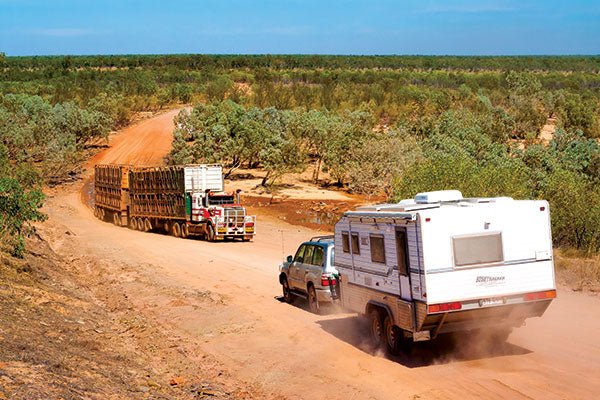
Caravan dust can become one of the most frustrating parts of off-road touring. After a day on corrugated dirt roads, it only takes a small amount of airflow through gaps, vents or service openings for fine dust to coat bedding, cupboards, appliances and storage areas inside the van.
The challenge is not always poor seals. Dust enters because of pressure differences between the inside and outside of the caravan. Without positive cabin pressure, dusty air naturally gets pulled inward through small openings while towing or during strong wind conditions.
A caravan dust reduction system helps manage this by introducing filtered air into the van and creating positive pressure inside the cabin. This guide explains how caravan dust ingress works, why positive pressure matters, the difference between passive and active systems, and how the HTP Dust Reduction System helps reduce dust during both travel and camping.
Shop Caravan Dust Reduction SystemsSource: Heavy Terrain Products
Contents
How does dust enter a caravan?
Dust enters caravans because air naturally moves from high pressure areas to low pressure areas. When the pressure outside the van becomes greater than the pressure inside, dusty air is pushed through any available gap or opening.
- Door and window seals
- Roof hatches and vents
- Electrical and plumbing passthroughs
- Appliance cutouts and service doors
- Cable entry points
- Body joins and trim gaps
Even small gaps that normally go unnoticed can allow fine red dust into the caravan when pressure differences build while towing.
Why is red dust such a challenge?
Australian red dust is especially difficult because it is extremely fine, highly airborne and abrasive. Once it becomes suspended behind vehicles or in strong wind conditions, it can travel deep into caravan interiors and settle into hard-to-clean areas.
Ultrafine particles
Red dust is fine enough to pass through tiny openings that larger debris would never enter.
Abrasive material
Dust does not just create mess. Over time it can wear down seals, electronics, drawer runners and fabrics.
Airflow movement
Dust remains airborne for long periods once disturbed by traffic, wind or towing turbulence.
Difficult cleanup
Fine dust settles into vents, bedding, storage spaces and appliance cavities where cleaning becomes time-consuming.
Better seals alone will not completely stop dust ingress. Managing airflow and maintaining positive pressure inside the caravan is the real key to reducing dust entry.
What is positive pressure?
Positive pressure means filtered air is pushed into the caravan faster than it can escape. This creates outward airflow through small gaps and openings, helping stop dusty outside air from being pulled inside.
Instead of the caravan acting like a vacuum, the airflow direction is reversed. Clean filtered air exits outward while towing and camping, helping reduce dust buildup inside the van.
Without positive pressure
Dusty outside air gets pulled inward through vents, seals and small openings during travel.
With positive pressure
Filtered air is pushed into the van first, helping force airflow outward and reduce dust ingress.
Passive vs active dust reduction systems
Passive systems rely on vehicle motion and airflow while towing. Active systems use a powered fan to continuously push filtered air into the caravan and maintain more consistent positive pressure.
| Feature | Passive system | Active system |
|---|---|---|
| Works while driving | Yes | Yes |
| Works while parked | No | Yes |
| Fan-powered airflow | No | Yes |
| Positive pressure consistency | Variable | Consistent airflow support |
| Dust filtration | Limited | Improved filtration performance |
| Best suited for | Occasional dirt road use | Frequent off-road and outback touring |
HTP Dust Reduction System
HTP Dust Reduction System
The HTP Dust Reduction System is an Australian-made active pressure system designed specifically for caravans travelling in harsh dusty conditions.
The system uses a high airflow 12V fan to continuously introduce filtered air into the caravan interior. This helps create positive pressure inside the van while travelling or parked, reducing the amount of dusty outside air entering through seals and openings.
Unlike passive vents that rely on towing speed and external airflow, the HTP system actively maintains airflow into the cabin. This helps improve dust reduction performance across corrugated roads, outback tracks and windy campsites.
Deflectors and replacement filters
HTP Dust Reduction Deflector
The HTP Dust Reduction Deflector helps improve airflow direction and provides additional protection around the intake area during dusty or wet conditions.
HTP Replacement Filter
The HTP Replacement Filter allows filters to be changed quickly during heavy touring use. Regular filter checks help maintain airflow performance and pressure efficiency.
HTP Dust Reduction System installation video
Watch the installation walkthrough below to see how the HTP Dust Reduction System is fitted into a caravan roof setup and how the system integrates into the van.
Dust reduction system comparison
| System type | Advantages | Limitations |
|---|---|---|
| Passive vent system | Simple operation with no powered fan required. | Only works effectively while towing and airflow varies with speed and conditions. |
| HTP active dust reduction system | Fan-powered filtered airflow with consistent positive pressure support while driving and parked. | Requires 12V power and correct installation. |
Dust reduction tips for caravanners
Check seals regularly
Inspect door seals, hatch trims and cable entries regularly to make sure gaps have not opened during travel.
Replace filters when needed
Fine red dust can clog filters over time. Carrying a spare filter during long trips is recommended.
Keep airflow paths clean
Clean vents and airflow areas regularly to help maintain stable pressure and system efficiency.
Reduce unnecessary openings
Minimise opening windows and roof hatches while towing through dusty conditions.
Buying checklist
- Choose an active system for stronger positive pressure support.
- Look for systems designed for Australian off-road conditions.
- Use replaceable filters suitable for ultrafine red dust.
- Check airflow specifications and fan performance.
- Consider professional installation for best sealing and placement.
- Carry spare filters during remote travel.
- Maintain caravan seals even when using a dust reduction system.
FAQs
Do caravan dust reduction systems really work?
Active caravan dust reduction systems help reduce the amount of dust entering the van by maintaining positive cabin pressure and introducing filtered air into the interior.
Can dust still enter a caravan with good seals?
Yes. Even well-sealed caravans can still experience dust ingress because pressure differences force air through very small openings during travel.
What is positive pressure in a caravan?
Positive pressure means filtered air is pushed into the caravan faster than it can escape, helping force airflow outward rather than pulling dusty air inward.
Are active systems better than passive systems?
Active systems generally provide more consistent dust reduction because they use powered airflow instead of relying only on towing speed and outside airflow conditions.
How often should caravan dust filters be replaced?
Filter replacement depends on how dusty the travel conditions are. During heavy outback touring, filters should be checked regularly and replaced when airflow reduces.
Can a caravan dust reduction system run while parked?
Yes. Active systems continue introducing filtered air while parked, helping maintain positive pressure during windy or dusty camping conditions.